
Home/Buyer's Guide/Custom CNC Machining Services: The Buyer's Guide
Scope of service · six screening criteria · materials and processes · RFQ checklist · cost drivers · qualification documents
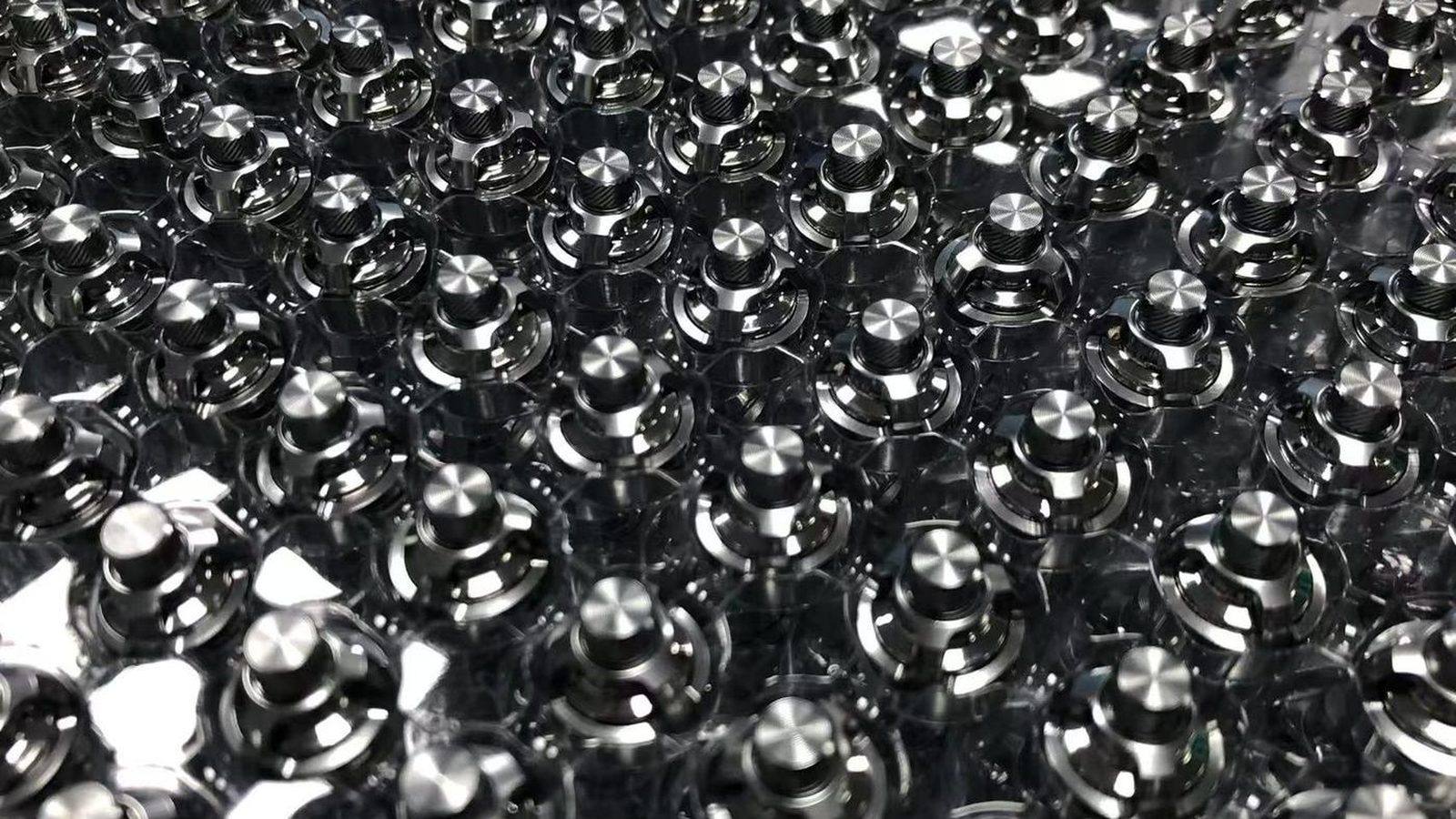
People who search for custom CNC machining services are rarely shopping for catalogue parts. They have a drawing, a STEP file, or a bracket that failed in the field — and they need someone to machine it to that print, in the material they specified, to the tolerance they called out, before the date they promised their own customer. That is a different purchase from buying standard hardware, and it deserves a different evaluation.
Sourcing failures in this category rarely come from a shortage of suppliers. They come from three gaps: the buyer and supplier never agreed on what "custom" covers, the RFQ was too thin to quote accurately, and the supplier was qualified on a machine list rather than on process discipline. This guide takes those three in the order a real project hits them.
1. What Custom CNC Machining Services Actually Cover
"Custom" is used loosely in this industry. Before you compare prices, confirm which of the following you are actually buying.
Made-to-print, not made-to-catalogue
Made-to-print means the supplier machines to your 2D/3D definition and is responsible for conformance. Catalogue parts are standard geometries with published tolerances. Some suppliers advertise "custom" while only offering limited modification of standard profiles. A quick test: ask whether they will machine a part with a non-standard thread callout and an asymmetric wall thickness.
Three service models — and the combination most buyers actually need
| Service model | Typical order | What it optimises | Where it breaks down |
|---|---|---|---|
| Prototype shop | 1–50 pcs | Speed, DFM feedback | Repeatability at volume, process records |
| Job shop | 50–5,000 pcs | Breadth of processes, flexibility | Change control, SPC, traceability |
| Contract manufacturer | 1,000+ pcs/yr with forecast | Cost-down, documentation, capacity | Urgent one-offs, high-mix small batches |
For most OEM and ODM buyers the practical answer is a supplier that runs prototypes and low-volume production through the same process and the same inspection standard — because re-qualifying a second supplier costs you a month, not a few points of margin.
2. Six Screening Criteria, Ordered by How Well They Predict Failure
2.1 Certification — read the scope, not the logo
ISO 9001:2015 is a floor, not a differentiator. Automotive work calls for IATF 16949; medical devices for ISO 13485. But note that these are system certifications for a site, and they must cover the process you are buying — machining, finishing, assembly. Ask for the certificate number and the scope statement, and check that it actually reads "machining of metal components," rather than trusting the badge on the homepage.
2.2 Machine capability — simultaneous 5-axis or 3+2 positioning?
Having a 5-axis machine is not the same as having 5-axis capability. Ask: simultaneous 5-axis with RTCP, or 3+2 indexed positioning? What is the maximum envelope? Stainless and titanium need torque at low rpm — does the spindle hold it? Then ask for two or three parts they are running now that resemble yours in material family and complexity. A machine list proves capital; a part list proves process.
2.3 Tolerance — ask what they can hold on your feature
Separate positioning accuracy from achievable tolerance on the part. Commercial CNC machining typically holds ±0.05 mm on general features and ±0.01–0.02 mm on critical fits. ±0.005 mm is achievable selectively, on specific features, with the right fixturing and a temperature-stable environment — it is not a blanket claim for a whole component. Ask what inspection equipment is in-house (CMM, height gauge, roughness tester, hardness tester) and whether reports are issued per lot.
2.4 Capacity and lead time — find the bottleneck
Ask about shift pattern, machines per operator, and which process is the bottleneck this month. It is usually not the machining centre but inspection, finishing, or heat treatment. Prototypes in 3–10 days and low-volume production in 2–5 weeks are normal ranges. A supplier who quotes five days for 2,000 pieces without asking about batch structure is guessing.
2.5 MOQ and the setup-amortised price curve
Custom work is priced as setup and programming divided across quantity, so the curve is steep between one and one hundred pieces. Confirm whether there is a minimum order charge, whether programming and fixturing are billed separately, and where the price breaks sit. A supplier who refuses to quote below 100 pcs is usually protecting machine utilisation, not admitting a capability limit.
2.6 Engineering feedback — the cheapest quality signal available
The most underrated criterion. A good supplier returns a DFM note within 24–48 hours: a wall that is thinner than it needs to be, a tolerance that drives cost without function, a thread that needs a special tool. Language matters too — if your drawings are in English with GD&T, the engineer reading them should be able to answer technical questions in writing, in English, without an intermediary.
| Criterion | Ask this | Good answer | Red flag |
|---|---|---|---|
| Certification | Send the certificate and its scope statement | ISO 9001:2015 with machining in scope; IATF 16949 / ISO 13485 where your industry requires it | A badge on the homepage; "certificate available on request" |
| Equipment | Simultaneous 5-axis with RTCP, or 3+2? What envelope? | A specific answer plus two comparable parts in production | Machine photos without models; "we have 5-axis" |
| Tolerance | What can you hold on this feature, and how do you verify it? | Feature-specific answer with the inspection method named | "±0.005 mm on all features" |
| Capacity | Which process is your bottleneck this month? | Names inspection/finishing/heat treat and gives dates | 2,000 pcs in five days, no questions asked |
| Pricing | Is setup charged separately? Where are the breaks? | Setup, material, machining and finishing itemised | One number, no breakdown, no tiers |
| Engineering | Will an engineer review the drawing before we order? | Two or three concrete risks within 24–48 hours | "No problem, we can make anything" — and no questions |
3. Materials and Processes You Can Realistically Source Together
Six material families that cover most parts
| Material | Typical parts | Machining note | Watch out for |
|---|---|---|---|
| Aluminium 6061-T6 | Housings, brackets, heat sinks, cold plates | Fast, stable, cheap to finish | Thin walls deflect; deburr before anodising |
| Aluminium 7075-T6 | Robot arms, aerospace structure, fixtures | High strength-to-weight | Residual stress; distortion when thin sections are removed |
| Stainless 303 | Shafts, fittings, inserts | Free-machining | Lower corrosion resistance than 304 |
| Stainless 304 / 316L | Medical, food, marine, vacuum | Work-hardens, gummy | Tool wear, chatter in deep pockets, built-up edge |
| 17-4PH | Valve bodies, high-strength shafts | Machined in solution or H900/H1075 condition | Much harder to cut after ageing |
| Brass C360 | Connectors, fittings, terminals | Excellent machinability | Lead content restricts medical and RoHS markets |
| Copper (OFHC) | Cold plates, busbars, electrodes | Gummy, sticks to the edge | Burrs, tool life, oxidation before plating |
| Titanium Grade 5 | Aerospace, medical implants | Low thermal conductivity | Heat concentrates at the cutting edge; high cost |
| PEEK / POM / PTFE | Insulators, seals, wear parts | PEEK is abrasive; POM needs stress relief | Melting, dimensional drift, chatter |
Processes and finishing — what should be in-house
3-axis, 4-axis, simultaneous 5-axis, mill-turn, EDM and wire EDM, surface grinding: these define geometric capability. Anodising (Type II / Type III), passivation, electropolishing, zinc and nickel plating, bead blasting, powder coating, laser marking, heat treatment: these define appearance and corrosion resistance. Ask which are in-house and which are subcontracted — subcontracting is normal, not disclosing it is not. Finishing is the most common source of slipped dates and cosmetic rejects, so its lead time belongs in the quotation as a separate line. Two part families with very different process demands are covered in the cold plate machining and humanoid robot component guides.
4. The RFQ That Gets Quoted Right the First Time
Most quote revisions originate in the RFQ, not the supplier — and a complete RFQ is also the fastest way to compare CNC machining services from two or three suppliers on equal terms. Send all eight of these at once:
| # | Input | Why it matters |
|---|---|---|
| 1 | 3D model (STEP) + 2D drawing (PDF) | The model defines geometry; the drawing defines tolerance and finish. A model alone invites assumptions |
| 2 | Material grade and condition | Write "6061-T6" or "17-4PH H900", not "aluminium" or "stainless" |
| 3 | Critical features and GD&T | Mark the 5–10 that matter; blanket tight tolerance inflates the whole price |
| 4 | Finish specification and cosmetic surfaces | Ra value, treatment spec (e.g. anodise MIL-A-8625 Type II Class 2, black), and which faces are visible |
| 5 | Quantity, batch size, annual demand | This drives process choice more than any other input |
| 6 | Required date, Incoterm, destination | Determines scheduling priority and freight mode |
| 7 | Quality documents required | FAI, mill certificate, CoC, CMM report — state it before the order, not after |
| 8 | Known risks | Thin walls, previous failures, assembly fit, hardness requirements |
Four gaps that cause a second round of quotes
Material condition left unstated ("stainless" could be 304 or 17-4PH — the price difference is more than double); finish specified as "standard" (they quote the cheapest, you inspect against the most expensive); tolerance shown only on the model and not on the drawing; and quantity given as a total without a batch structure (1,000 pcs in one run and 4 × 250 pcs schedule very differently). Each gap buys one round trip, and one round trip against a promised delivery date usually costs a week.
5. Why Quotes for the Same Drawing Differ by 3–5x
| Cost element | Share of piece price | What drives it |
|---|---|---|
| Machine time | 40–70% | Cycle time × hourly rate; 5-axis rates run 1.5–2.5× 3-axis |
| Material | 10–30% | Blank size, buy-to-size vs offcut, certification |
| Setup and programming | 5–20% | Amortised over quantity; 5-axis setup is measured in hours |
| Fixturing | 0–10% | Soft jaws, custom fixture, vacuum plate |
| Finishing (often subcontracted) | 5–15% | Anodising is charged largely per lot, which hurts small batches |
| Inspection and documentation | 3–10% | CMM programming, FAI report, material traceability |
| Overhead and margin | 8–25% | Utilisation, order size, payment terms |
| Freight and duty | varies | Incoterm, air vs sea, destination country |
Five levers that reduce piece price without touching quality
- Rationalise tolerance: each tightening step typically adds 15–45% to cost. Return non-functional tolerances to ±0.05 mm.
- Substitute material: where strength allows, 7075 to 6061, or titanium to 17-4PH, can halve the material line.
- Reduce setups: designing three machined faces down to two removes one setup and one datum transfer.
- Use batch tiers: splitting annual demand into 2–3 runs frees cash and still reaches the mid-tier price.
- Finish only what is seen: skipping anodising or blasting on non-cosmetic faces removes a per-lot charge immediately.
If you do not have a drawing yet and only need a budget bracket, our CNC machining cost calculator takes material, process, tolerance, finish, quantity and cycle time and returns a per-part and total range in about 30 seconds. It is a bracket, not a quotation — a formal quote is built line by line from your drawing and returned within 24 hours.
6. Qualifying the Supplier: Documents, Not Impressions
A factory visit shows management; it does not show process capability — and process capability is what you are actually buying when you outsource CNC machining services. What constrains a supplier is a set of deliverable, traceable documents:
- First article inspection (FAI): ballooned drawing with actual values, deviations flagged, disposition stated
- Material certificate: mill cert with a heat number traceable to your lot
- Per-lot inspection report: CMM dimensional report plus key feature data
- Certificate of conformance: explicit statement of delivery to drawing and standard
- Process capability: Cp/Cpk ≥ 1.33 on critical features over a 30-piece sample
- Change notification: written ECN before any change to process, material, or subcontractor
- Corrective action: 8D or equivalent with a real root cause; "operator error" alone does not count
- Incoming inspection: an AQL sampling plan agreed before the first shipment
This sounds heavy, but it only needs close attention for the first three lots. Once the process is stable, inspection can move to sampling, and your total cost of purchase actually falls. For a deeper look at how a quotation is itemised, see our CNC supplier screening and quotation breakdown guide.
7. Sourcing Custom CNC Machining Services From China: What Actually Changes
The price gap is real but much narrower than it was a decade ago. What you are really buying now is process density: material, machining, finishing and inspection within a few hours' drive. That compresses lead time more than it compresses price.
- Communication window: 12–13 hours behind US Eastern; written, asynchronous communication is the norm, and one well-written message beats a meeting
- IP: NDA before drawings; state contractually who owns the programs, fixtures and tooling
- Payment: 30% T/T deposit and 70% before shipment is standard; L/C for large orders
- Incoterms: EXW, FOB Shenzhen and DDP allocate duty and clearance very differently — under FOB, customs is yours
- Tooling ownership: put it in the PO, or you cannot take it with you when you switch suppliers
When local sourcing still wins
One to five pieces against a deadline measured in days, rework of an existing part, and export-controlled work (ITAR, for example). Do not cross an ocean for unit price on those three — freight and compliance will consume the entire difference.
8. Ten Red Flags in a Quotation
| What you see | What it usually means |
|---|---|
| A firm price for a complex 5-axis part within two hours, with no questions | Nobody read the drawing; the number will be revised |
| "We hold ±0.005 mm on all features" | Tolerance is marketing, not a process plan |
| Inspection report refused "for competitive reasons" | There is no inspection report |
| Cannot name the machine that will run your part | It will be subcontracted, and the date is not theirs to keep |
| Quoted date excludes finishing lead time | You will discover this in week five |
| A 30% discount on request with no design change | The first price was padded, or the material will change |
| Nearly the same unit price for 1 pc and 1,000 pcs | Setup is not modelled; something else is being cut |
| No NDA, or an NDA that excludes "existing customers" | Your drawings are not protected |
| Samples arrive without a material certificate | Traceability is not part of their process |
| No DFM comments, ever | They machine exactly what you send, including the mistakes |
9. Frequently Asked Questions
These four come up most often when overseas buyers compare CNC machining services. Answers are given as ranges rather than slogans.
How are custom CNC machining services priced?
Piece price is built from machine time, material, amortised setup and finishing. On small aluminium batches, setup and programming often account for more than half of the unit price; between 1 and 100 pieces the unit price typically falls 50–70%; 5-axis work and titanium move it back up. Send a drawing for an itemised quote within 24 hours.
What is the minimum order quantity?
One piece. A single prototype costs more per unit than a batch because setup and programming cannot be amortised; volume tiers start at 50 pcs, and annual framework pricing can be discussed from 500 pcs.
How long does a project take from PO to delivery?
Prototypes usually run 3–10 days including programming and first-article approval; low-volume production 2–5 weeks. Finishing adds 3–7 days, and freight depends on the mode. If you have a hard docking date, state it in the RFQ.
Who owns the drawings, programs and tooling?
You do. We work under NDA by default and state program, fixture and tooling ownership in the order; program files and physical tooling can be handed over at project close.
Request a Quotation
Share your requirements — formal quotation within 24 hours. Your information is used for quoting only and kept strictly confidential.
10. Next Step
If you already have a drawing, send the STEP and PDF, the material grade, the quantity and your target date. You will get an itemised quotation and a DFM note within 24 hours — including the tolerances we think could be relaxed to reduce cost. Goldencube was founded in Shenzhen in 2012, is ISO 9001:2015 certified, runs a 45-person team and 20+ machining centres (3/4/5-axis and mill-turn), holds ±0.005 mm where it matters, inspects on Mitutoyo CMM, machines from one piece, and works under NDA. Cold plates, robot structures and medical/automation parts are routine categories for us — see capabilities and products.
Have drawings? Get an itemized quote within 24 hours
A 2D drawing + 3D model (STEP / IGES) + quantity tiers are enough. Material, machine hours, programming & fixtures, outsourcing and inspection listed separately, plus a free DFM sheet. No drawing review calls.
Send drawings for a quote