
Home/Buyer's Guide/CNC Machining China: Buyer's Guide & Cost Calculator
Supplier screening criteria · processes and materials · cost structure · live cost calculator · direct RFQ
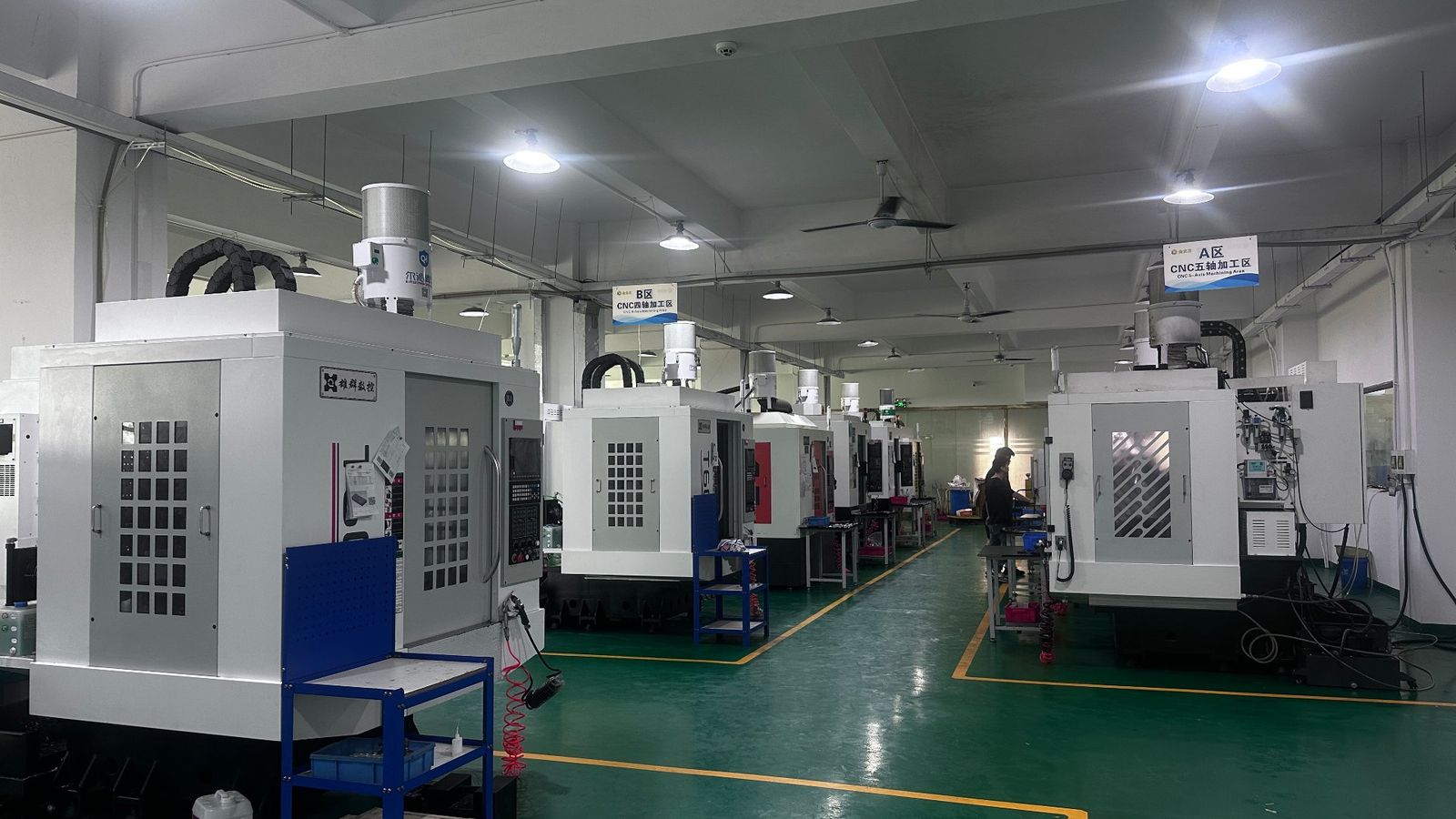
Over the past decade, buyers have kept choosing CNC machining China suppliers not because it is cheap, but because it is fast, stable and cost-efficient. The Pearl River and Yangtze River deltas form complete supply ecosystems — bar stock, tooling, heat treatment and surface finishing within a few hours of any shop. Prototyping lead times for 5-axis parts are often half of Western domestic quotes. But more suppliers also means higher screening costs: quotes for the same drawing can vary 3–5x, and quality does not always follow price. This guide covers supplier screening criteria, process and material selection, and cost structure for CNC machining from China — with a built-in CNC machining cost calculator you can use right on this page.
1. Supplier Screening: Five Hard Criteria
1.1 Certifications
ISO 9001:2015 is the baseline, not a bonus. Automotive parts require IATF 16949; medical devices, ISO 13485. More telling than certificates: will the supplier sign an NDA and share recent inspection reports for similar materials and processes? If they refuse to share inspection samples, treat any low quote with caution.
1.2 Equipment Capability
Verify three things: whether machines are in-house (not subcontracted), whether spindle count and travel cover your parts, and whether the shop runs 5-axis RTCP and mill-turn capability. Deep-cavity channels, impellers and monolithic structural parts depend directly on multi-axis capability for both accuracy and lead time.
1.3 Tolerance and Inspection
±0.1mm is the industry baseline for general milling; precision shops hold ±0.02mm, and factories with temperature-controlled floors and CMMs can stably deliver ±0.005mm. Ask explicitly: do first articles come with a full-dimension inspection report? What AQL is used for batch sampling? Is dedicated metrology equipment available?
1.4 Lead Time
Prototypes typically ship in 3–10 days; production runs take 2–5 weeks depending on quantity. Two questions matter: does your order queue normally or use a fast lane, and what is the contingency plan for machine breakdowns or material delays? A verbal "no problem" is meaningless — look for written delay-liability terms.
1.5 MOQ
Legitimate CNC shops accept orders from 1 piece, with prototype prices above volume prices — that is normal. Be wary of two quote patterns: abnormally low prices (usually achieved by skipping inspection and deburring) and opaque volume breaks (a serious supplier will show clear step pricing at 50 / 500 / 5,000 pcs).
2. Main Processes and Materials
Process Selection
- 3-axis milling: the workhorse for housings, plates and brackets — low cost, fast programming.
- 4/5-axis machining: impellers, medical implants and monolithic parts; 5-axis RTCP reduces accumulated error from multiple setups.
- Mill-turn: shafts and rotary connectors — turning, milling and drilling in one setup for better concentricity.
- Surface finishing: anodizing for aluminum (clear/black/hard), nickel plating or black oxide for steel, passivation/electropolishing for stainless, polishing or bead blasting for plastics.
Material Scenarios
- Aluminum 6061/7075: best value for structural parts, jigs and heat-dissipation components.
- Stainless 304/316/17-4PH: medical, food and marine applications needing corrosion resistance and strength.
- Carbon steel 1045: general mechanical parts with good all-round properties after quench and temper.
- Brass/Copper: conductive and thermal components, optical and fluid connectors.
- Titanium Ti-6Al-4V: aerospace and medical; a difficult-to-machine material with machine-hour costs 2x aluminum or more.
- Engineering plastics PEEK/PEI: insulation, chemical resistance and lightweighting; blank cost dominates.
3. Cost Structure and Quote Drivers
What a Quote Is Made Of
- Machining cost: machine-hour rate × per-part cycle time — typically 40–70% of the total and the biggest variable.
- Material cost: blank size (part envelope + clamping allowance) × material price; titanium and engineering plastic blanks can exceed machining cost.
- Setup/programming: amortized into the first articles — larger volumes spread it thinner, which is the math behind volume discounts.
- Surface treatment: outsourced anodizing and plating priced by area or per piece.
- Inspection, packaging and freight: full-dimension reports, rust-proof packaging, international freight and duties confirmed separately.
What Moves Your Unit Price
- Each tighter tolerance grade (±0.1 → ±0.02 → ±0.005mm) adds roughly 15–45% through longer cycle times and higher scrap risk.
- Machinability: stainless takes about 1.5x the machining time of aluminum; titanium 2x or more.
- Volume: unit price at 100 pcs is typically ~30% below 10 pcs, driven by setup amortization and batch tooling.
- If finish and deburring standards are not stated on the drawing, suppliers quote to the lowest standard — drawing completeness directly affects quote comparability.
4. CNC Machining Cost Calculator: Estimate in 30 Seconds
The CNC machining cost calculator below uses industry-typical machine-hour rates and material factors. Enter material, process, tolerance, quantity and per-part machining time to get an instant per-part and total estimate — a quick sanity check against supplier quotes.
Estimates use typical industry machine-hour rates and material factors, assuming a blank of about 100 × 100 × 30 mm, excluding international freight, duties and inspection-report fees. Formal pricing is based on your 2D/3D drawings — we reply within 24 hours.
5. FAQ
How is the calculator estimate different from a formal quotation?
The calculator uses typical industry machine-hour rates and material factors to bracket your expected price range. A formal quotation is itemized from your drawings — actual blank size, fixturing, tolerance and inspection requirements — and is returned within 24 hours.
What information do you need for an accurate quote?
2D/3D drawings (STEP/IGS/DWG preferred), material and temper, quantity, critical tolerances, surface finish requirements and annual demand. The more complete the package, the faster and more accurate the quote.
What is the MOQ? Can I order just 1 prototype piece?
Yes. CNC machining starts from 1 piece; prototype pricing above volume pricing is normal. Volume step pricing applies from 50 pcs, and framework agreements from 500 pcs.
What are typical lead times for prototypes and production?
Prototypes usually ship in 3–10 days; production runs take 2–5 weeks depending on quantity. Rush scheduling is available. We ship worldwide from Shenzhen via DHL/FedEx/air/sea with full tracking.
6. Get a Formal Quotation
Send us your 2D/3D drawings (STEP/IGS/DWG), material, quantity, tolerance and finish requirements — we reply with a formal English quotation within 24 hours. Prototypes ship in 3–10 days, under full NDA protection.
Request a Quotation
Share your requirements — formal quotation within 24 hours. Your information is used for quoting only and kept strictly confidential.
Have drawings? Get an itemized quote within 24 hours
A 2D drawing + 3D model (STEP / IGES) + quantity tiers are enough. Material, machine hours, programming & fixtures, outsourcing and inspection listed separately, plus a free DFM sheet. No drawing review calls.
Send drawings for a quote